Dimensional Storytelling: The Evolution of 3D Layered Christmas Geometric Wall Art
In recent years, holiday decor has moved beyond the predictable tinsel-and-ornament formula. One of the most compelling developments in festive interior design is 3D Layered Christmas Geometric Wall Art, a medium that transforms flat surfaces into immersive, sculptural experiences. This is not merely decoration but a form of spatial storytelling—where geometry, shadow, and layered depth converge to evoke the spirit of the season in a way that feels both contemporary and timeless.
Whether you are a professional interior stylist, a hobbyist woodworker, a digital fabrication researcher, or simply someone who values thoughtful holiday aesthetics, understanding the nuances of this craft opens up new possibilities for how we inhabit and celebrate our spaces. The following analysis explores the principles, materials, applications, and future trajectories of this art form, grounded in practical insight and real-world relevance.
Geometry as a Language of Celebration
At its core, 3D Layered Christmas Geometric Wall Art uses repeated and interlocking shapes—triangles, hexagons, circles, chevrons, and stars—to construct scenes that are abstract yet unmistakably festive. Unlike traditional imagery that relies on literal representation (a painted Santa or a glass bauble), geometric abstraction invites the viewer to complete the picture. A series of ascending triangular layers in forest green and warm gold can read as a forest of Christmas trees, while concentric star-cut sheets in silver and white evoke a snowy Bethlehem night.
The power of geometry lies in its universality. A hexagon suggests a snowflake without needing intricate filigree. A zigzag silhouette hints at a garland or evergreen bough. This approach works particularly well for audiences who appreciate clean lines and modern design but still want a strong seasonal connection. For educators and researchers in visual perception, this art form offers a fascinating case study in how the brain reconstructs meaning from minimal cues—a phenomenon known as pareidolia, where our pattern-seeking minds fill in the gaps.
Crafters and makers have embraced this language because it is both precise and forgiving. A laser cutter or CNC router can reproduce geometric components with extreme accuracy, while hand-cut versions allow for organic variation. The result is a body of work that ranges from stark minimalist compositions to richly detailed panoramas, depending on the number of layers, the complexity of the cuts, and the choice of finishes.
Layering as Visual Depth
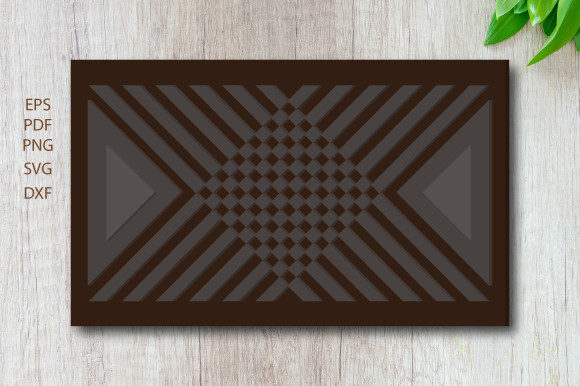
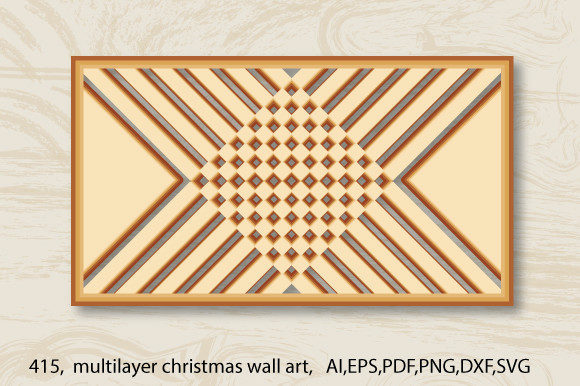
The defining characteristic of 3D Layered Christmas Geometric Wall Art is its multi-plane construction. Each layer is typically cut from a flat material—wood, acrylic, paper, or metal—and then mounted with spacers or shadow-box framing to create a physical gap between planes. This separation does more than add dimension; it manipulates light and shadow in ways that a single flat print cannot.
When light hits a layered piece from the side, each level casts a shadow onto the layer behind it, producing a gradient of darkness that changes with the angle of illumination. Early morning light may emphasize crisp contours, while warm evening lamp light softens the transitions. This temporal quality makes the artwork feel alive, subtly shifting its appearance throughout the day and across the holiday season.
For interior designers and homeowners, this dynamic quality is a significant practical advantage. A well-executed layered piece can serve as a focal point in a room without overwhelming other decor. It doesn't shout for attention; it earns it through subtle depth and material richness. In commercial settings—hotel lobbies, retail windows, corporate atriums—these pieces can anchor a holiday theme without resorting to clichés, projecting a polished, sophisticated brand identity.
From a fabrication standpoint, layering introduces important considerations. The thickness of each layer, the gap distance between planes, and the orientation of the grain or surface texture all affect the final visual effect. A common rule of thumb among experienced makers is that the gap should be at least equal to the thickness of the individual layers to ensure distinct shadow separation. Too small a gap, and the layers blur together; too large, and the composition loses cohesion. These are the kinds of technical trade-offs that separate amateur efforts from professional-grade work.
Material Alchemy: Choosing the Right Substrate
The choice of material fundamentally shapes the character of 3D Layered Christmas Geometric Wall Art. Each substrate brings its own aesthetic and practical properties.
- Wood (birch plywood, MDF, solid hardwood): Offers warmth and natural grain. It takes paint and stain well, allowing for everything from rustic barnwood tones to glossy painted finishes. Wood is durable and relatively easy to cut, sand, and assemble. It is the most common choice for makers and consumers seeking a handcrafted look.
- Acrylic and polycarbonate: Deliver a sleek, modern appearance with translucency or transparency. Colored acrylic can produce vibrant, saturated layers that glow when backlit. Clear acrylic creates subtle refractive effects and works beautifully in light-filled spaces. It is more brittle than wood and requires careful cutting to avoid chipping.
- Cardstock and heavy paper: Ideal for budget-friendly or temporary installations. Paper layers can be cut with a craft knife or die-cutting machine and are lightweight enough to mount with foam tape. While less durable, they allow for intricate detail and are perfect for renters, students, or seasonal swaps.
- Metal (aluminum, brass, copper): Provides a premium, industrial edge. Laser-cut metal sheets offer precision and reflectivity, especially when finished with a brushed or polished surface. Metal is heavy and more expensive, but it can be used sparingly as accent layers within a predominantly wood or acrylic composition.
Researchers and material scientists have also begun exploring sustainable composites—such as layered bamboo, recycled paperboard, and bio-resin sheets—for environmentally conscious production. As consumer demand for eco-friendly holiday decor grows, these alternatives are likely to become more visible in both handmade and commercial markets.
Spatial Dynamics: Scale, Placement, and Interaction
Installing 3D Layered Christmas Geometric Wall Art requires thinking about the surrounding architecture. A small piece (20-30 cm square) can feel lost on a large empty wall but can create a powerful accent in a hallway, above a desk, or within a gallery wall arrangement. Conversely, oversized installations—spanning 1.5 meters or more—can transform a dining room or living room wall into a seasonal centerpiece.
Orientation also matters. Many geometric designs are inherently directional; a piece depicting an ascending tree shape naturally works best when viewed from a standing position. If the artwork is placed above a sofa or bed, the sightline shifts, and the layered effect may appear compressed. Professional stylists recommend installing the piece so that the center of the composition is at eye level for the primary seating or standing area in the room.
Lighting should be considered during installation. A dedicated picture light or a nearby floor lamp can dramatically enhance the shadow play. Some makers now incorporate LED strips behind or between layers to create a backlit glow—especially effective with acrylic or translucent paper. This interactive element blurs the line between static art and ambient lighting, offering a multifunctional decorative asset.
For business owners—cafes, boutique hotels, galleries—a rotating seasonal installation of layered geometric art can become part of the customer experience. Patrons may return year after year to see a new iteration, building anticipation and loyalty. The modular nature of layered construction makes it relatively easy to update individual panels or replace worn sections, extending the lifespan of the investment.
The Maker's Perspective: From Digital Design to Physical Assembly
For creators and hobbyists, producing 3D Layered Christmas Geometric Wall Art involves a workflow that blends digital design with hands-on craftsmanship. The process typically begins with vector software—Adobe Illustrator, Inkscape, or Fusion 360—where each layer is drawn as a separate closed path. The designer must plan for alignment registration marks, spacing tolerances, and material kerf (the slight material loss during cutting).
Once the digital files are ready, the cutting method depends on available tools. Laser cutters offer speed and precision, but they require ventilation and careful power settings to avoid burning. CNC routers handle thicker materials and can carve pockets for inlay effects. For those without access to digital fabrication, hand-cutting with a scroll saw, jeweler's saw, or precision knife is entirely viable, especially for designs with broad, simple shapes.
Assembly is where the artistry truly shines. Each layer must be sanded, painted or sealed, and then mounted using adhesive spacers, standoffs, or a custom shadow box. The sequence of stacking affects the final image; reversing the order of two layers can completely change the narrative. Experienced makers often create a physical test assembly on a flat surface before committing to permanent bonding.
A growing community of makers shares these techniques online—on YouTube, Instructables, and dedicated forums—offering free patterns and step-by-step guides. This open exchange has accelerated innovation, allowing newcomers to learn from seasoned practitioners and adapt designs for their own use. For educators, this represents a rich project-based learning opportunity that integrates geometry, design thinking, and practical fabrication skills.
Curatorial Thinking: Building a Cohesive Holiday Collection
For collectors and stylists, 3D Layered Christmas Geometric Wall Art does not exist in isolation. It is most impactful when curated alongside complementary decor elements. A geometric layered snowflake on the wall can be echoed by a hexagonal side table, a star-patterned rug, or a sculptural centerpiece with similar angles. This repetition of visual motifs creates a cohesive sensory environment without resorting to matching sets.
Color palettes in layered geometric art tend toward mid-century modern and Scandinavian influences: deep forest green, burgundy, navy, gold, silver, and off-white. However, there is growing experimentation with unexpected tones—charcoal, blush, teal, and copper—that still read as festive when combined with the right forms. The key is contrast between layers; a piece with all layers in similar tones will lack the depth that makes the style compelling.
Businesses that rotate their holiday displays annually might invest in a modular system where the base frame remains constant and only the inner layers are swapped. This approach reduces material waste and storage requirements, aligning with sustainability goals. It also allows for staff participation in designing future layers, fostering engagement and creativity within the team.
Future Vectors: Where the Craft Is Heading
Looking ahead, several trends are shaping the evolution of 3D Layered Christmas Geometric Wall Art. One is the integration of smart home technology. Imagine a layered piece where internal LEDs shift color or pulse in sync with holiday music, controllable via voice command or a phone app. Prototypes already exist, and as components become cheaper and easier to code, this will likely move from niche to mainstream.
Another direction is hyper-personalization. Online platforms now allow customers to upload a photo or select a theme—family name, pet portrait, favorite holiday memory—and have it converted into a layered geometric design. This bespoke service merges sentimental value with modern aesthetics, appealing to consumers who want decor that is both beautiful and meaningful.
Finally, there is a push toward kinetic elements. Movable layers that slide, rotate, or pivot when touched introduce an interactive, playful dimension. These pieces function as art and experience simultaneously, especially appealing in environments where engagement is valued, such as children's museums, libraries, and interactive retail pop-ups.
For researchers and educators, these developments open new lines of inquiry: How does layered depth affect attention and emotional response? What geometric arrangements produce the most satisfying aesthetic experience? Can kinetic layered art improve well-being in clinical or educational settings? The intersection of art, engineering, and psychology is fertile ground for further study.
Ultimately, 3D Layered Christmas Geometric Wall Art is more than a trend. It represents a matured understanding of how we use space, light, and form to celebrate and connect. Whether you are making it, buying it, studying it, or simply living with it, this art form offers a rich and evolving way to mark the season—one layer at a time.