Understanding Corn Text Effects: A Fresh Take on Typography and Design
In the ever-evolving world of graphic design, typography remains one of the most powerful tools for communication. But beyond choosing a font or adjusting kerning, designers are constantly looking for ways to make text more expressive, memorable, and visually engaging. One niche but increasingly popular technique is the use of corn text effects — a stylistic approach where letterforms are infused with the textures, colors, patterns, or motifs inspired by corn. Whether you're a seasoned designer, a content creator, or simply someone curious about creative typography, understanding corn text effects can open up new possibilities for your projects. This article explores what corn text effects are, why they matter, how they work, and how you can apply them in modern design, branding, education, and daily creative work.
What Are Corn Text Effects?
At its core, a corn text effect refers to any typographic treatment that visually references corn — the grain, the cob, the husk, or the broader agricultural and cultural symbolism associated with it. This can manifest in several ways:
- Texture-based effects: Letters are filled or overlaid with a pattern resembling corn kernels, husk fibers, or dried corn rows.
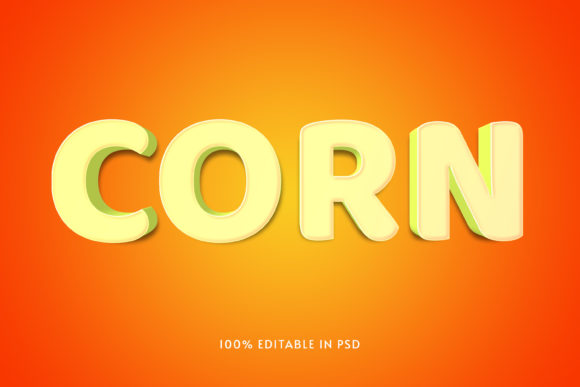
- Color palettes: Warm yellows, golden ochres, earthy greens, and creamy whites are used to evoke the natural tones of corn.
- Shape integration: Individual characters are subtly reshaped to mimic the silhouette of a corn kernel or the curve of a husk.
- 3D and layered effects: Text appears as if carved into or growing out of a cornfield or cob, adding depth and realism.
- Mixed media: Real corn elements (photographs, scanned textures) are blended with digital typography to create a tactile, organic feel.
The key is that corn text effects are not just about decoration — they are about meaning. By linking text to a familiar natural object, designers can tap into emotions related to harvest, abundance, growth, tradition, or even humor, depending on the context.
Why Corn Text Effects Matter in Modern Design
You might wonder: why focus on corn specifically? Corn is one of the most widely cultivated crops in the world and holds deep cultural and economic significance in many regions, especially in the Americas. In design, this familiarity makes corn a powerful visual shorthand. Using corn text effects can:
- Build instant recognition: People immediately associate corn with certain ideas — food, farming, autumn, sustainability, or rural life.
- Evoke warmth and nostalgia: The golden hues and organic textures of corn can create a comforting, down-to-earth feeling.
- Support storytelling: A headline that looks like it's made of corn kernels can reinforce a message about natural ingredients, local produce, or harvest festivals.
- Differentiate your work: In a sea of generic typography, a unique texture like corn makes your design stand out and feel handcrafted.
Whether you're designing a poster for a fall fair, a label for an artisanal popcorn brand, or a social media graphic for a farm-to-table restaurant, corn text effects can instantly communicate the right mood and message.
How Corn Text Effects Fit into Creativity and Technology
With modern design tools, creating corn text effects is more accessible than ever. Software like Adobe Photoshop, Illustrator, and even free alternatives like GIMP or Canva offer layering, masking, and texture mapping features that allow designers to apply corn-inspired visuals to text. But the process isn't purely technical — it requires a creative eye to balance realism with readability.
Digital Techniques for Corn Text Effects
Here are some common methods used by designers to achieve corn text effects:
- Texture overlay: A high-resolution image of corn kernels or husk is placed over the text layer, and blending modes (like multiply or overlay) are used to integrate it naturally.
- Displacement mapping: A texture map distorts the letter shapes slightly, making them appear embossed or carved into a corn surface.
- Custom brushes: Designers create or download brushes that scatter kernel-like shapes along the edges of letters, giving a dotted, textured border.
- Gradient maps: A yellow-to-green gradient is applied to text, with noise or grain added to mimic the irregular color of corn.
- 3D modeling: For more advanced projects, text is extruded in 3D and then textured with corn cob imagery, often rendered with lighting that highlights the kernel bumps.
Each method has its strengths, and the best choice depends on the desired level of realism, the platform (web, print, video), and the overall design style.
Practical Applications Across Fields
Corn text effects are not limited to graphic design. They have practical relevance in several areas:
Branding and Packaging
Food brands, especially those selling corn-based products like tortilla chips, popcorn, corn syrup, or corn oil, can use corn text effects to create a direct visual link between the product and its ingredient. A logo or product name rendered in a corn texture immediately communicates "natural," "wholesome," and "fresh from the farm." It also helps the product stand out on a crowded shelf.
Event and Seasonal Marketing
Harvest festivals, county fairs, Thanksgiving promotions, and autumn-themed campaigns often rely on corn imagery. A headline like "Fall Harvest Sale" with a corn text effect reinforces the seasonal theme and draws the eye. Even digital banners and email headers benefit from this tactile, seasonal touch.
Education and Informational Content
Teachers and content creators can use corn text effects in educational materials about agriculture, botany, nutrition, or economics. For example, a poster explaining the parts of a corn plant or the journey from field to table becomes more engaging when the title text resembles the crop itself. This approach helps bridge the gap between abstract information and tangible experience.
Digital Media and Social Content
In the world of Instagram, TikTok, and YouTube thumbnails, standing out is crucial. Corn text effects can add a playful, organic, or rustic vibe to quotes, titles, and overlays. They work especially well for content related to cooking, gardening, sustainability, or rural lifestyle. Even a simple "Recipe of the Day" can feel more inviting with a warm corn-textured title.
Art and Experimental Typography
For artists and typography enthusiasts, corn text effects offer a way to explore the intersection of nature and language. By pushing the boundaries of how text can look and feel, they create pieces that are both readable and sculptural. These works often appear in galleries, zines, and experimental publishing.
Common Misunderstandings About Corn Text Effects
As with any design technique, there are a few misconceptions worth clarifying:
- "Corn text effects are only for rustic or agricultural themes."
While they certainly suit those contexts, corn text effects can also be used in unexpected ways — think urban street art, avant-garde fashion posters, or even tech branding with a sustainable twist. The key is to balance the texture with modern layout and color schemes. - "They ruin readability."
Poorly executed effects can indeed make text hard to read, but thoughtful design preserves legibility. Using the effect on large headlines rather than body text, ensuring contrast, and keeping letterforms clear are all part of the craft. - "You need expensive software."
While advanced tools offer more control, free alternatives and even online generators can produce convincing corn text effects. The technique is about creativity, not just budget. - "It's just a trend."
Texture-based typography has been around for decades, and nature-inspired design is timeless. Corn text effects may evolve, but their appeal is rooted in a fundamental human connection to natural forms.
How to Get Started with Corn Text Effects
If you're new to this technique, here's a beginner-friendly workflow using free or low-cost tools:
- Choose your text: Start with a bold, sans-serif or slab-serif font. These handle textures better than thin or intricate typefaces.
- Find a corn texture image: Search for royalty-free images of corn kernels, cobs, or husks. Look for high-contrast, well-lit photos.
- Layer it: In your design software, place the texture over the text. Use a clipping mask to confine the texture to the letters.
- Adjust blending: Experiment with blend modes (multiply, overlay, soft light) and opacity until the texture integrates naturally.
- Add depth: Apply a slight drop shadow or inner shadow to make the text look embossed or raised from the surface.
- Refine: Tweak colors, contrast, and sharpness so the effect feels intentional, not messy.
Remember, the goal is not to make the text look exactly like a photograph of corn, but to evoke the essence of corn in a way that enhances your message.
The Bigger Picture: Why Nature-Inspired Typography Matters
Corn text effects are part of a broader movement in design that seeks to reconnect digital creations with the natural world. In an age of screens and synthetic everything, textures derived from real plants, animals, and natural materials bring a sense of authenticity and grounding. They remind us that design doesn't have to be cold or purely geometric — it can be warm, tactile, and rooted in the things we see and touch every day.
Moreover, using natural elements in typography can subtly promote environmental awareness. When we see a headline that looks like it's made of corn, we pause to think about where our food comes from, what sustainability means, and how design can celebrate the natural world rather than replace it.
Final Thoughts
Corn text effects may start as a simple visual trick, but they open the door to deeper conversations about meaning, materiality, and creativity. Whether you're designing a logo for a local farm, creating content for a food blog, or exploring typographic art, this technique offers a versatile and expressive tool. By understanding how to use texture, color, and shape thoughtfully, you can make your text not just readable, but memorable — and that's the mark of truly effective communication.
So the next time you sit down to design a headline, consider stepping away from the standard gradients and shadows. Look at the world around you. Look at the cornfield, the husk, the golden kernel. Let nature guide your letters, and watch your message come to life.