Understanding Guatemala's Volatile Geography with Multi-Hazard 3D Mapping
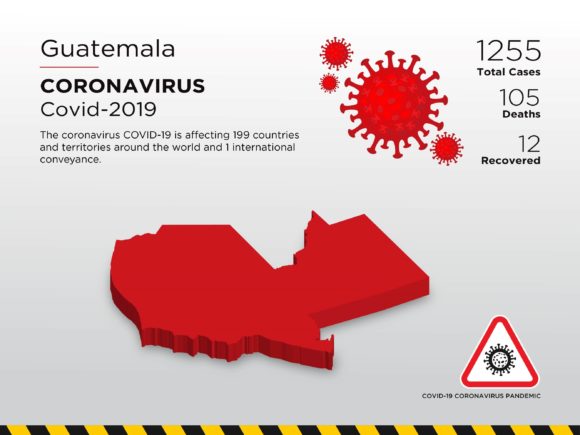
Guatemala occupies a position of extreme geological and meteorological convergence. Straddling the boundary of four tectonic plates and exposed to weather systems from both the Pacific and the Atlantic, the country experiences a uniquely volatile combination of seismic, volcanic, and hydrometeorological threats. Traditional two-dimensional cartography, while useful for basic reference, inherently simplifies the complex reality of this landscape. A dedicated Guatemala Affected Country 3D Map provides the essential analytical framework for visualizing how these hazards interact across the country's dramatic vertical terrain, from the Pacific coastal plains to the highland peaks and the lowland rainforests of Petén.
Volcanic Hazard Corridors in Three Dimensions
The string of active stratovolcanoes running parallel to the Pacific coastline—including Fuego, Pacaya, and Santiaguito—represents a continuous threat to populated areas. The 2018 eruption of Volcán de Fuego was a stark reminder that elevation and slope direction dictate survival in these zones. A 2D topographic map can show contour lines, but it cannot adequately convey the confined geometry of a barranco (ravine) that channels a pyroclastic surge. A three-dimensional model allows volcanologists and disaster managers to simulate the flow of superheated gas and debris, revealing how it spills over drainage divides and which valley walls might be overtopped.
For researchers monitoring volcanic domes, the ability to overlay InSAR (Interferometric Synthetic Aperture Radar) deformation data onto a 3D mesh of the volcano is indispensable. They can measure inflation or deflation of the edifice in millimeters, correlating these changes with seismic swarms. For local emergency committees, a simplified 3D visualization helps communicate evacuation routes that are physically feasible given the steep terrain. When building a Guatemala Affected Country 3D Map for volcanic zones, the inclusion of high-resolution DEMs from LiDAR or TanDEM-X is critical for accurately modeling lahar paths, which can travel many kilometers from the vent and devastate communities along river valleys during heavy rains.
Hydrometeorological Risk and the Dry Corridor in 3D Space
The Guatemalan Dry Corridor, which stretches through the eastern and central departments, is acutely susceptible to drought punctuated by extreme flash flooding. Understanding this hydrology requires a volumetric grasp of the landscape. A three-dimensional model enables analysts to overlay real-time precipitation forecasts from satellites like GPM (Global Precipitation Measurement) onto the watershed topology. They can instantly identify which sub-watersheds have the highest runoff potential based on slope angle and land cover.
During the 2020 Eta and Iota hurricanes, 3D flood models proved vital. Emergency managers could rotate the terrain to visualize the bottlenecking of water at narrow canyon points in the Polochic valley and the Cahabón River. They predicted which communities would be isolated when bridges were overtopped. For agricultural insurers and coffee exporters, a 3D terrain model combined with soil maps helps determine which hillside farms are most vulnerable to landslides and which valleys are prone to frost accumulation. This practical application transforms raw geospatial data into a risk assessment tool that directly affects crop yields and rural livelihoods.
Operational Workflows for Emergency Preparedness and Response
The practical use of 3D geospatial analysis in Guatemala extends from government agencies like CONRED (National Coordinator for Disaster Reduction) to international humanitarian teams. A typical operational workflow involves several distinct steps:
- Data Acquisition: Pulling SRTM 30-meter DEMs for regional context or 1-meter LiDAR data for critical infrastructure zones.
- Hazard Layer Integration: Draping satellite-derived datasets such as NDVI (vegetation health), surface water extent from Sentinel-1 SAR, and fault line vectors onto the terrain mesh.
- Query and Analysis: Using GIS tools to query slope angles to identify safe helicopter landing zones or to calculate the volume of material in a potential landslide.
- Visualization and Dissemination: Exporting interactive scenes as web-based applications or video flythroughs that can be understood by non-technical decision-makers in a crisis coordination center.
This workflow empowers a broad audience. Professionals in disaster risk reduction rely on the accuracy of the measurements. Business owners use the models for site selection and logistics. Educators bring the volcanic chain into the classroom through interactive 3D globes. Hobbyists contribute by digitizing infrastructure from high-resolution imagery, enriching the base data for everyone in the community.
Data Integration and Analytical Challenges in the Tropics
Building a reliable Guatemala Affected Country 3D Map is not without significant challenges. The tropical climate presents persistent obstacles for remote sensing. Persistent cloud cover over the highlands and Petén can obscure optical satellite imagery for months. This forces analysts to rely heavily on Synthetic Aperture Radar (SAR), which penetrates clouds but requires specialized processing to interpret correctly. Additionally, the steep terrain creates radar shadow and layover effects in DEMs, introducing artifacts that must be corrected using ground control points.
Another consideration is data latency and resolution. While SRTM data covers the entire country, its 30-meter resolution may smooth out critical micro-terrain features that control local drainage. For high-stakes applications like dam safety or urban planning in Guatemala City's ravine neighborhoods, centimeter-accurate drone photogrammetry is necessary. The computational requirements are also substantial; rendering a seamless 3D model of a large volcanic complex or an entire watershed requires powerful GPUs and optimized software, which may be a barrier for smaller organizations or independent researchers. Despite these limitations, the analytical depth provided by three-dimensional visualization far outweighs the investment required to build and maintain the datasets.
Community Mapping and Temporal Terrain Analysis
A powerful emerging trend in Guatemalan geospatial science is community-led mapping. Using consumer-grade drones and photogrammetry software like OpenDroneMap, local university groups and municipalities are creating their own high-fidelity 3D models. They map informal settlements on the steep slopes around Lake Atitlán, track deforestation in the Maya Biosphere Reserve, and monitor the expansion of avocado plantations in the highlands. This democratization of technology means that a Guatemala Affected Country 3D Map is no longer the exclusive domain of national government or international agencies. It is a living, collaborative document.
Temporal analysis adds another critical dimension. By comparing 3D models derived from satellite imagery captured months or years apart, researchers can calculate volumetric changes in a mining operation, measure sediment buildup behind a hydroelectric dam, or quantify the retreat of a cloud forest. This time-series approach transforms the static 3D map into a dynamic monitoring system. For environmental advocates, this provides irrefutable visual evidence of landscape change that can be used to influence policy and corporate practices.
The Spectrum of Users and Entry Points
The utility of three-dimensional mapping in Guatemala is remarkably broad. Researchers in volcanology and hydrology benefit from high-fidelity modeling tools that integrate with their statistical analysis software. Consumers and creators engaged in travel or documentary filmmaking use 3D terrain animations to provide geographic context for storytelling about the country's cultural heritage. Business owners in the logistics and insurance sectors utilize risk maps to make informed decisions about asset placement and premium calculation.
For educators, the visual appeal of a rotating, layered 3D terrain is pedagogically powerful. It helps students intuitively grasp the relationship between plate tectonics and the formation of the Central American Volcanic Arc. Hobbyists with an interest in GIS can start using free tools like QGIS and Qgis2threejs to explore the Guatemalan landscape. They can layer digital elevation data with land cover classifications downloaded from services like Copernicus Open Access Hub. The entry barrier has never been lower, and the quality of open-source data available for Guatemala continues to improve.
Ultimately, the value of three-dimensional geospatial analysis lies not in the graphical spectacle, but in the clarity it provides for consequential decision-making on the ground. Whether it is planning the route for a new rural health clinic to ensure it remains accessible during the rainy season, modeling the dispersion of volcanic ash to protect aviation routes, or calculating the carbon sequestration potential of a reforestation project in the Sierra de las Minas, adding the z-axis transforms geographic data into actionable geographic wisdom. The landscape of Guatemala demands this depth of understanding.