Watercolor Hand Drawn Nature: A Versatile Aesthetic for Modern Design
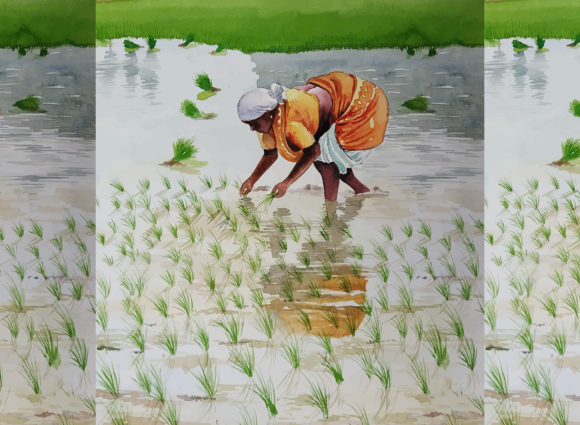
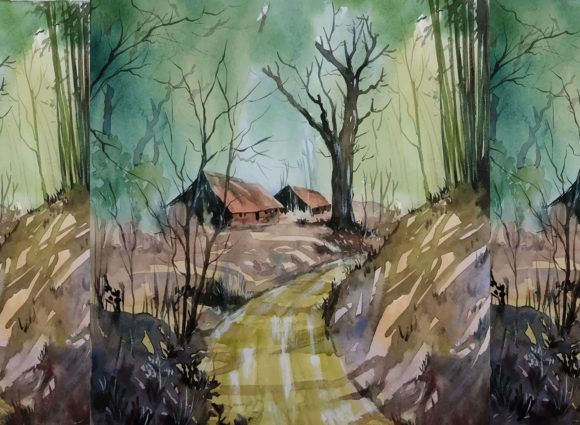
There is a quiet shift happening in visual communication. While crisp vector graphics and hyper-realistic renders still dominate many commercial spaces, a growing number of creators, marketers, and brands are turning to softer, more expressive visual languages. At the heart of this movement lies Watercolor Hand Drawn Nature — an approach that marries the unpredictability of watercolor washes with the sincerity of hand-drawn lines, all centered on natural subject matter. It is not merely a trend, but a response to a deepening need for warmth, authenticity, and human touch in a world saturated with digital precision.
Whether you are a graphic designer assembling a brand kit, an illustrator building a personal project, or a content creator looking for distinctive visuals, the appeal of watercolor hand-drawn nature goes beyond simple decoration. It brings atmosphere, texture, and a sense of deliberate imperfection that feels refreshingly honest. Let’s take a closer look at what this style really offers, how it fits into practical workflows, and why it continues to capture attention across such a wide range of industries.
What Makes Watercolor Hand Drawn Nature Distinctive
At first glance, watercolor hand-drawn nature might seem like any other botanical or landscape illustration. But the combination of medium and technique creates a unique character. Watercolor is inherently fluid — colors bleed into one another, edges soften, and each stroke carries a degree of unpredictability. When this is paired with hand-drawn lines, whether loose and sketchy or more deliberate, the result is a layered image that feels both organic and intentional.
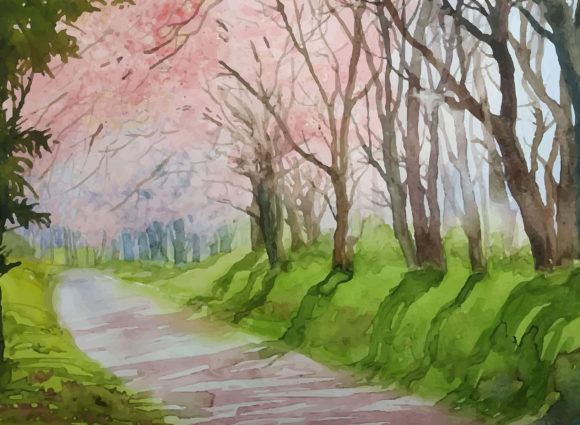
The "nature" component grounds the work in familiar forms: leaves, flowers, trees, mountains, animals, and water. These subjects are universal. People connect with them on an instinctive level. When rendered in watercolor hand-drawn nature, they carry an emotional weight that a photograph or flat icon often cannot replicate. The visible brush texture, the slight fading of pigment, and the irregular linework all suggest a human hand was present. This sense of presence is precisely what makes the style so effective in building trust and rapport with an audience.
The Balance Between Control and Spontaneity
One of the most compelling qualities of this style is how it sits between control and chance. An illustrator might begin with a faint pencil sketch to map out the composition, then apply washes of color that bloom and pool in unexpected ways. The hand-drawn lines that follow — perhaps in ink or a darker watercolor mixture — tie the piece together, offering structure without stifling the fluidity. This tension creates visual interest. Every piece becomes a slight variation, never perfectly repeatable, which adds value in a world of mass-produced imagery.
How Watercolor Hand Drawn Nature Fits Into Modern Workflows
It might be tempting to assume that a hand-rendered style has limited application in digital-first environments, but the opposite is true. Watercolor hand-drawn nature has found its way into branding, web design, packaging, editorial layouts, social media assets, and even video motion graphics. The key lies in how these elements are captured, processed, and integrated.
Most professionals work with scanned or photographed watercolor textures and hand-drawn linework. These are cleaned up in software like Adobe Photoshop or Procreate, converted to transparent PNGs or layered files, and then composited into digital projects. The rough edges, paper grain, and subtle color variations remain intact, giving the final design a tactile quality that flat digital brushes often lack. Some designers even combine multiple watercolor hand-drawn nature assets to build modular scenes, swapping out leaves or flowers depending on the season or campaign theme.
Use in Branding and Identity Design
For brands that want to convey sustainability, organic values, or a handcrafted ethos, watercolor hand-drawn nature offers immediate visual shorthand. A logo composed of a single watercolor leaf paired with a hand-drawn stem feels far more approachable than a geometric alternative. It signals that the company values artistry and care. On product packaging, this style softens the overall appearance and can influence how consumers perceive the product's quality. A skincare line using watercolor botanical illustrations, for example, subtly suggests natural ingredients and gentle formulations without needing to say it outright.
Digital Content and Social Media
In the crowded space of social media, standing out often depends on texture and uniqueness. A flat, templated graphic may get scrolled past, but a piece of watercolor hand-drawn nature — perhaps a loose wreath of eucalyptus leaves framing a quote, or a watercolor mountain range behind a typography overlay — invites a moment of lingering. The organic softness contrasts with the sharp, uniform rectangles of most feeds. It gives the viewer something to feel, not just see. Many content creators build libraries of these assets, mixing and matching them to maintain a cohesive yet varied visual identity across posts, stories, and highlight covers.
Practical Benefits for Artists and Designers
One of the most overlooked advantages of working with watercolor hand-drawn nature is how forgiving the process can be. Unlike precise digital illustration, where every pixel can be scrutinized, watercolor and hand-drawing embrace minor flaws. A stray brushstroke or uneven line can become part of the piece’s personality. This lowers the barrier for experimentation. You do not need to be a master watercolorist to produce compelling results. A simple leaf painted with two washes of color and outlined with a fine pen can carry as much charm as a highly detailed botanical study.
For commercial projects, this means faster turnaround times without sacrificing visual quality. A set of hand-drawn nature elements can be produced in a single afternoon, scanned, and then adapted into dozens of different layouts. The same leaf can reappear in different sizes, rotations, and color overlays, maintaining coherence while offering flexibility. Additionally, because each original piece is unique, you avoid the sterile look that can come from relying solely on brushes and filters.
Considerations When Choosing or Creating These Assets
Before diving into a project that uses watercolor hand-drawn nature, there are a few practical factors worth weighing. If you are sourcing assets from online marketplaces, look for collections that offer high-resolution scans with transparent backgrounds. Pay attention to color fidelity — some scans flatten the vibrancy of watercolor, while others preserve the brightness and subtle gradients. If you are creating your own, think about paper choice. Cold-pressed watercolor paper gives more texture, which scans beautifully but might not suit every digital application. Hot-pressed paper offers a smoother finish and is easier to work with when you want cleaner lines.
Color palette is another important consideration. Watercolor hand-drawn nature often works best with muted, earthy tones — sage greens, dusty blues, warm ochres, and soft blush pinks — because these colors mimic natural pigments and feel cohesive when combined. However, bolder palettes can be used effectively for children’s illustrations or vibrant seasonal campaigns. The key is consistency. Mixing too many saturated colors can clash with the inherent softness of the watercolor medium, so it helps to limit your palette to three to five core hues per project.
Examples and Real-World Scenarios
Imagine a small café that wants to rebrand with a rustic, nature-inspired identity. The owner commissions a set of watercolor hand-drawn nature assets — a sprig of rosemary, a slice of lemon, a coffee bean pod, and a few abstract brush strokes. These appear on the menu boards, the website background, the takeaway cups, and social media posts. The overall effect is cohesive without being sterile. Each element feels handcrafted, which mirrors the café’s emphasis on artisanal food and drink.
Another scenario: an independent publisher launching a poetry collection about forests and solitude. Instead of using a photograph for the cover, they choose a watercolor hand-drawn nature illustration of a single pine tree fading into mist. The soft edges and visible paper grain evoke exactly the contemplative mood of the poems inside. The same illustration is used on the back cover and in marketing materials. It becomes the visual anchor for the entire publication.
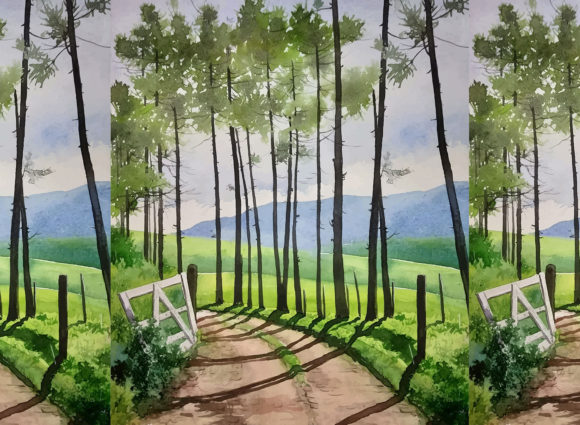
In digital product design, a meditation app might use watercolor hand-drawn nature elements for its background scenes during guided sessions. A gentle mountain range painted in soft blue-gray washes, with hand-drawn pine trees in the foreground, helps users feel grounded and calm. Unlike a photograph, which can be too specific or distracting, the hand-drawn quality keeps the focus on the experience itself. The subtle movement of the watercolor texture, even when static, suggests something living and breathing.
Observations on Authenticity and Longevity
There is an authenticity to watercolor hand-drawn nature that feels increasingly valuable. As audiences become more visually literate, they recognize when a design is assembled from stock components or generated by AI. Hand-drawn and hand-painted elements carry a signature of human effort. They are not perfect, and that is precisely their strength. People respond to them with more trust and less skepticism. A brand that uses this style signals that it values craft over speed, and quality over quantity.
From a longevity standpoint, watercolor hand-drawn nature does not date as quickly as some graphic styles. It has a timeless quality because it draws on artistic traditions that have existed for centuries. A botanical illustration from the 1800s still feels relevant today, and a modern watercolor leaf painted in a similar style holds the same staying power. This makes it a wise investment for projects that need to remain current for years, such as logos, book covers, or core brand visuals. Trends come and go, but the combination of watercolor, hand-drawn linework, and natural subjects feels built to last.
Integrating With Other Visual Styles
Another advantage worth noting is how well watercolor hand-drawn nature plays with other styles. It can be combined with geometric elements for a modern-meets-rustic look. It can sit behind bold sans-serif typography without competing for attention. It can even be layered over photographs to create mixed-media compositions. For designers who work across multiple projects, having a library of watercolor hand-drawn nature assets is like having a versatile instrument that works in nearly any key. The soft textures smooth out harsh digital edges, and the organic forms add warmth without overwhelming the layout.
Final Thoughts on Using Watercolor Hand Drawn Nature
Whether you are building a brand from the ground up, refreshing an existing visual identity, or simply looking for a way to make your content feel more human, watercolor hand-drawn nature offers a path that is both beautiful and practical. It bridges the gap between traditional artistry and modern digital needs. It gives viewers something to connect with on a sensory level — the look of pigment spreading across paper, the slight wobble of a hand-drawn line, the familiarity of a leaf or a flower rendered with care.
The real power of this style lies not in any single technique, but in the feeling it creates. It suggests patience, attention, and an appreciation for the natural world. In an era where so much content is produced at speed and scale, these qualities stand out more than ever. If you have not yet explored what watercolor hand-drawn nature can do for your work, try adding just one element — a single watercolor leaf or a hand-drawn branch — to your next project. The effect might be subtle, but it will likely be noticed. And that is the kind of detail that turns good design into something memorable.