White Paper 3D Text Effect: Elevating Minimalist Design in Everyday Projects
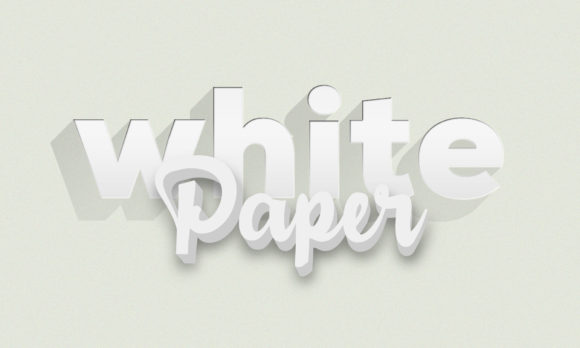
The White Paper 3D Text Effect is a design technique where typography appears to lift off or embed into a paper-like surface, creating a subtle illusion of depth. Unlike flashy neon or metallic 3D effects, this style keeps the focus on readability and texture. It mimics embossing, debossing, or a soft shadow, all while preserving a clean, off-white background. The result is a quiet kind of sophistication—think of how a letterpress business card or a foil-stamped cover feels in hand, but translated into a digital or print asset.
This effect works especially well when the goal is to communicate elegance, reliability, or a tactile sense of quality. It's not for every project, but when used intentionally, it can transform an otherwise plain layout into something memorable. Below are a few real-world situations where this effect shines, along with observations from designers who have used it across different industries.
Subtle Branding for Corporate Communications
Annual reports, investor decks, white papers, and internal newsletters often struggle with the tension between professionalism and visual interest. You can't go wild with gradients or stock photography, but plain text feels flat. The White Paper 3D Text Effect offers a middle ground. By gently elevating the company name or a key statistic, the page gains a quiet authority. One designer I spoke with used it for a financial institution's quarterly update: just the word "Growth" in a serif font with a soft extruded shadow. Readers commented that it felt "confident without being arrogant."
This approach works particularly well for businesses that value trust and stability. Law firms, consultancies, and non-profits have used it on cover pages and section dividers. The effect doesn't compete with the content—it frames it.
Packaging That Feels Premium Without Overdoing It
Walk into a specialty store and look at the shelves: minimalist skincare, craft chocolate, small-batch spices. Many of these products use matte or kraft paper packaging with subtle dimensional text. The White Paper 3D Text Effect here acts as a understated luxury signal. It suggests that the product inside is carefully made, without the need for loud logos or CMYK gradients.
For a brand selling organic honey, for example, the label might use an embossed-looking white text on a slightly darker cream background. The effect catches light differently depending on the angle of the shelf. Buyers perceive it as natural and premium. One limitation? On very large format packages, the effect can look too faint. It works best when the viewer holds the item close—perfect for small boxes or tubes.
Digital Presentations That Hold Attention
Slide decks are notorious for being either text-heavy or animation-heavy. The White Paper 3D Text Effect offers a third path: readable titles that feel tactile, even on screen. Instead of a drop shadow that floats, the effect creates the impression that the letters are physically present on a virtual paper surface. This is especially effective in pitch decks for creative or sustainable brands.
I've seen it used in a deck for a co-working space: the word "Community" appeared to be pressed into a textured background. It didn't move or flash. It just sat there with a quiet presence. Audience members remembered that slide. The trick is to keep the depth subtle. Overdo it, and the effect looks like cheap CGI. Keep it minimal, and it feels like a printed piece that happened to be filmed.
Web Design Headers and Hero Sections
On websites, the White Paper 3D Text Effect can bring a tactile quality to an otherwise sterile digital canvas. It's particularly compelling for portfolios, editorial sites, or any brand that wants to convey a handmade or artisanal feel. The effect pairs well with paper-like textures (think linen or speckled backgrounds) and soft lighting.
A small web design agency I know rebuilt their homepage around a paper-textured hero with the company name in a debossed-looking 3D style. The load time was negligible because the effect was achieved with CSS and a subtle SVG shadow. Their bounce rate dropped. Why? The homepage didn't look like a template. It looked like something you could touch. One caution: this effect can be lost on high-glare screens or in bright sunlight. It's a luxury for desktop and controlled viewing environments.
Certificates, Awards, and Diplomas
There's a reason official certificates use foil stamping or embossing: it signals authenticity. The White Paper 3D Text Effect mimics that feel in a more flexible and reproducible way. For corporate training programs, online course completions, or event participation awards, adding a subtle 3D text effect to the recipient's name or the organization logo adds a sense of ceremony.
Consider a scenario: a nonprofit gives out volunteer appreciation certificates. Using the effect on the phrase "With Gratitude" in a serif font with a slight bevel makes the document feel like a keepsake rather than a printout. It's cost-effective compared to physical embossing, and it works for both print and PDF delivery. However, the effect loses appeal if the certificate is printed on a low-quality home printer. The paper matter as much as the effect.
Social Media Graphics and Quote Cards
On platforms like Instagram, LinkedIn, and Pinterest, visual consistency is key. The White Paper 3D Text Effect can become part of a brand's visual signature. Instead of a flat quote on a solid bg, try a paper-textured card with the quote "embossed" in 3D. It catches the eye in a feed full of flat graphics and gradients.
A life coach I follow uses this effect for her weekly motivational posts. She writes short affirmations on a canvas-like background with a gentle 3D shadow. The posts regularly get higher engagement than her video content. She says the effect "slows people down." They stop scrolling because it looks like a physical card. The downside? It doesn't suit every kind of image—busy backgrounds or small text lose the nuance. Keep the composition simple.
Considerations Before Using the White Paper 3D Text Effect
This effect has a narrow range where it works best. Here are a few things to keep in mind:
- Font choice matters. Thin sans-serifs or intricate scripts tend to lose the 3D illusion. Bold serifs or slab serifs usually perform best. Test at actual display size.
- Resolution is critical. For print, the effect requires high DPI (at least 300) to avoid pixelated edges. For web, optimized SVGs or properly scaled CSS shadows prevent blurriness.
- Contrast must be subtle. Too much contrast (e.g., pure white text on a dark gray paper texture) kills the paper feel. Aim for off-white or cream tones for both background and text highlight.
- Background texture matters. A completely flat background won't sell the illusion. Use a slight grain, linen texture, or speckle. Overly busy textures undo the soft 3D effect.
- Size limits. The effect works best at medium to large sizes. Small text (under 14pt for print, under 24px for web) becomes unreadable. Reserve it for headings, logos, or short phrases.
When executed well, the White Paper 3D Text Effect can make a project feel deliberate and crafted. It doesn't scream for attention—it invites examination. That's often exactly what you want in a design that aims to build trust.
Who Benefits Most from This Effect?
Graphic designers working on branding projects will find it a useful tool for creating consistent visual systems across print and digital. Marketers looking to differentiate emails or landing pages can use it as a signature element. Small business owners who handle their own design (with tools like Canva or Photoshop) can experiment with it to give their materials a more polished look without hiring a specialist. Educators who create course materials can add a layer of professionalism to handouts and slides.
Ultimately, the people who benefit are those who need to communicate something clean, trustworthy, and a little bit special—without the bells and whistles. The White Paper 3D Text Effect doesn't do the heavy lifting for you, but it can lend a voice of quiet confidence to words that deserve to be heard.